
This month’s local wildlife site takes us along the canal from Glade Lane and Canalside Park in the west to the confluence of the canal with the River Brent to the northeast.
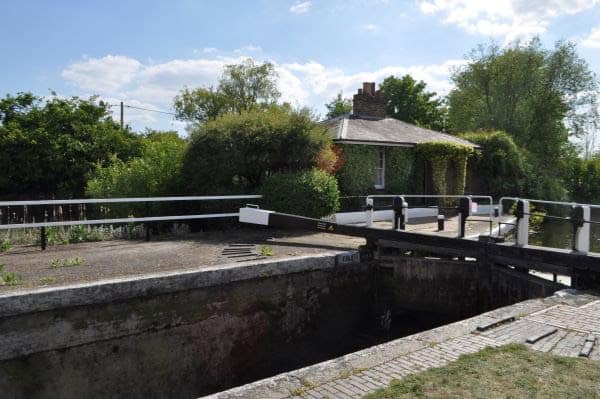
Canals (along with rivers) provide a vital green/blue corridor for animals and plants to travel and disperse. The canal was originally constructed to transport goods between London and the Midlands, and the Hanwell flight of six locks built in 1794 is now designated as a special monument.
The most frequently encountered birds on the canal are Mallard, Coots and Moorhens. Mute Swan, Canada and Egyptian Geese are most often seen close to the Windmill Lane Bridge. Cormorants and Herons can be observed fishing; the latter often from the waterside vegetation. If you are lucky, you will see a quick flash of turquoise as a Kingfisher speeds past and can be seen perched on branches overhanging the water.
During spring this year, we had a most unusual visitor in the form of a single Dark-bellied Brent Goose which lingered for four days. It arrived on a day when there was a large influx of the species across the London area. Hopefully, when it departed it safely continued its journey in a series of stops back to the Siberian breeding grounds.
Grey Wagtails are not infrequently encountered along here and occasionally a Common Tern may be seen fishing. Swifts and at-night bats, including two Pipistrelle species and Daubenton’s, feed on the numerous insects flying over the water such as chironomid midges, caddisflies, mayflies and damselflies.
From the trees and bushes close to the water a range of common garden birds can be seen and heard including Song Thrush, Wren, Blackcap, and Robin, as well as foraging parties of tits, while Buzzards, Red Kites and Sparrowhawks may be seen overhead.
Fish living in the canal include Three-spined Stickleback, Roach, Perch, Pike, Common Carp and Chub.
Perhaps more obvious on a warm summer’s day is the variety of dragonflies and damselflies. In early summer the large blue Emperors will be most obvious, while Black-tailed Skimmers will regularly settle on the walkway. Common Blue Damselflies will be the most numerous damselfly species while any floating vegetation may harbour Red-eyed or Small Red-eyed Damselflies. Later in the summer Common Darters and Migrant Hawkers will become more numerous with perhaps a sighting of a Brown or a Southern Hawker.
The area alongside the old St. Bernard’s Hospital which was opened in 1831 as an asylum has a particularly interesting flora. Lamb’s-ear grows along sections of the wall. This is a popular garden plant in the mint family that hails from the Caucasus with greyish leaves covered in long silky hairs which are popular with Wool Carder Bees and the pink flowers popular with a variety of other bees.
Also here is a very good population of the blue-flowered Meadow Clary, a declining native of well-drained soils. It is virtually confined on this stretch to the area adjacent to the old hospital. Perhaps this is linked to the old habit of sprinkling seeds of the plant over graves in south-east England in bygone times?
Also, quite frequent in this section is a good population of Field Scabious, which I suspect was also introduced at some point in the past, despite being a common native plant. Other plants here include Bird’s-foot Trefoil, Oxeye Daisy, the pernicious Green Alkanet, Mugwort, Yarrow and Thyme-leaved Sandwort.
On the damper canal side are plants more typical of wetlands including the poisonous Hemlock Water-dropwort. Gypsywort which was used as a dye plant, Marsh Bedstraw and Great Water Dock. Another interesting plant that flourishes here is Dittander. It’s native to coastal, brackish marshes so its origins here are of a naturalised plant that was used to give a hot flavour to dishes before the introduction of Horseradish.
Some of the side ponds along here include some colourful natives including Marsh Marigolds, Yellow Iris and the naturalised Monkey Flower from North America.
Plenty to look for along our canal as well as some fine meadows adjacent to the canal to explore.
Neil Anderson