
There is an intrepid new set of volunteers in Paradise Fields. You may have spotted us by the streams and ponds as you walk through, filling bottles with water while trying not to fall in! Thanks to funding from Earthwatch for water testing kits from Fresh Water Watch we are now testing water quality at the site.
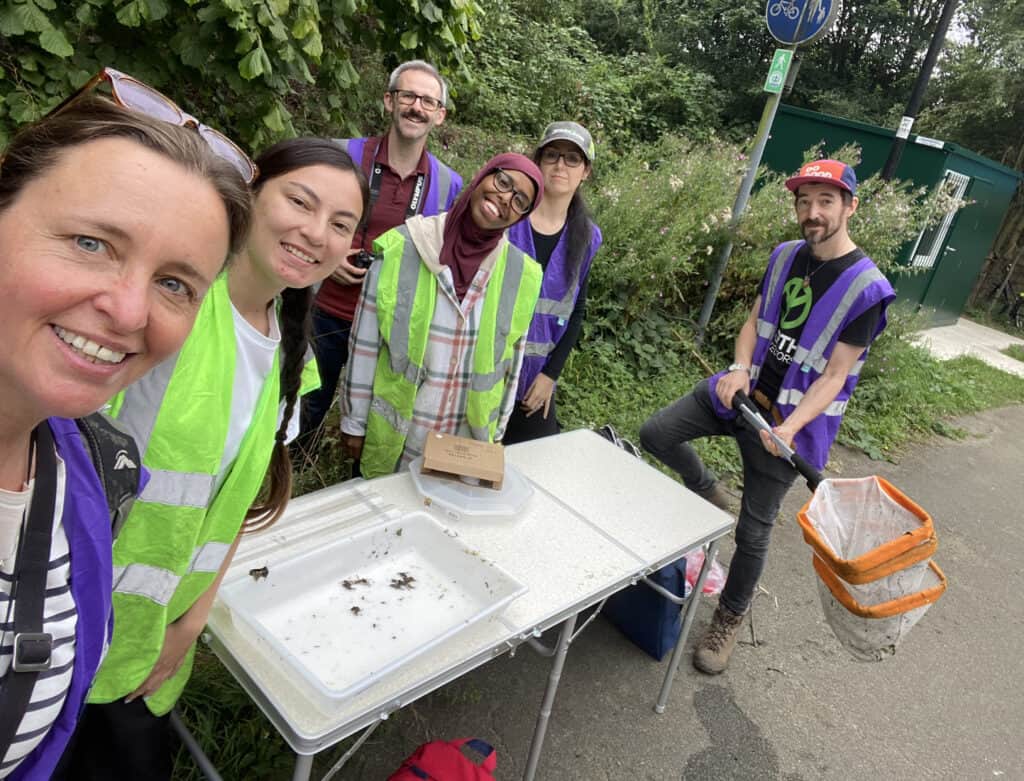
Why are we doing this? We want to monitor the water coming in and out of the site to see if we find any changes over time that might be the result of having our lovely beavers on site. Will they make the water quality better, worse or have no impact at all?

What are we doing? We are using the simple kits provided by FWW to check for phosphate and nitrate levels, and also checking the turbidity of the water. Both phosphates and nitrates are signs of sewage pollution and agricultural runoff. High turbidity can also be a sign of agricultural runoff or chemical pollution.
The results so far – we have been testing since May – show that the water entering the site via the Costons Brook does have high levels of pollution, particularly phosphates, and is of poor quality. The good news is that the water leaving the site has much lower levels of phosphates and nitrates. The results are slightly less good on turbidity because – as all the fence check volunteers can tell you – the beavers spend a lot of time digging right by the exit culvert so it is rather muddy! One of the most surprising results from the testing was to find the water in the subway pond is pristine – clear and with a very low level of pollutants.

On our last day out in August was great fun as we also took the chance to do some pond dipping to see what little bugs and beasties we could find. Results showed some great signs of improvement compared to sampling done before the beavers arrived. There were lots of gammarus – little arthropods that swim on their sides – and waterlice, which are related to woodlice. We also found a juvenile newt in the main pond – which is a first – and lots of other encouraging signs that life is returning to Paradise Fields.
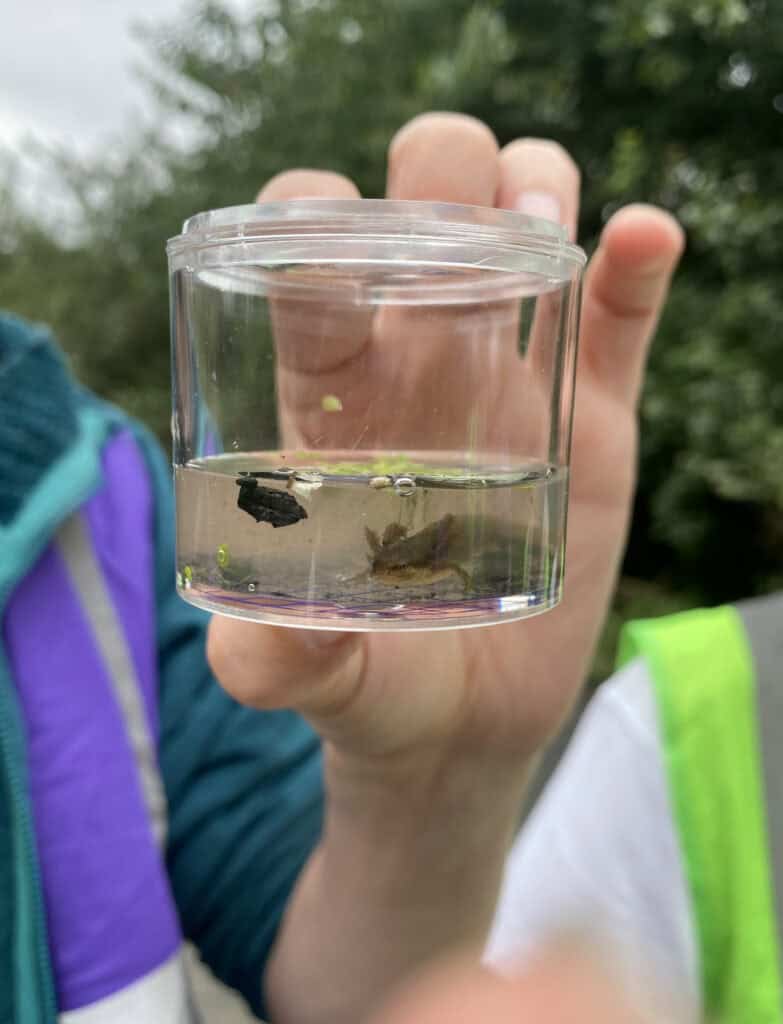
Again, the subway pond, where we caught diving beetle larvae and springtails in our nets, came top. We plan to carry on the pond dipping to see how invertebrates change as the beavers continue their work damming and changing the shape of the ponds.
If you are interested in seeing our results you can find them on the Fresh Water Watch site. You can also see the results from other volunteer groups in the area, including Perivale Woods where EWG has been releasing harvest mice.
And if you would like to join us as we sample the water over the next year to see what other exciting things we find just drop us a line hello@ealingwildifegroup.org. Everyone is welcome, no experience needed!
Elene Ares
Volunteer