
Ealing is home to a population of a beautiful yet declining species of amphibian; the Great Crested Newt (Triturus cristatus) the largest of the three native newt species in the UK.
This dark grey amphibian has warty white spots and an orange-to-yellow belly with black spots. Males have a wavey crest during breeding season giving the newt its name.
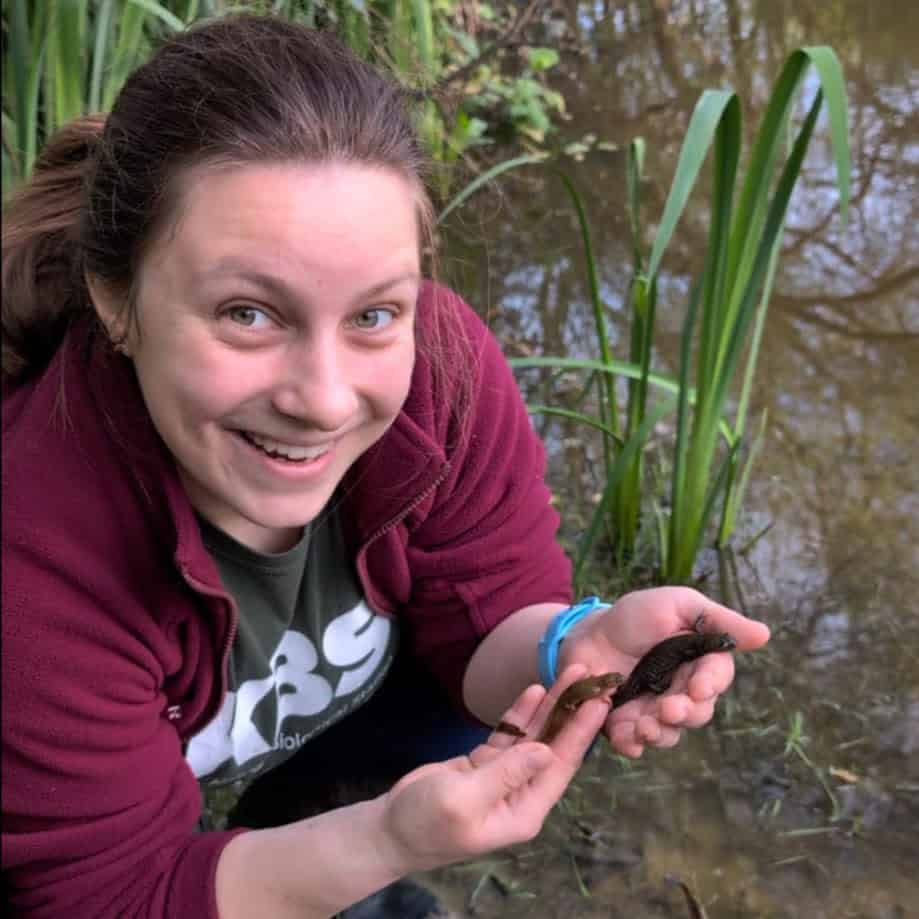
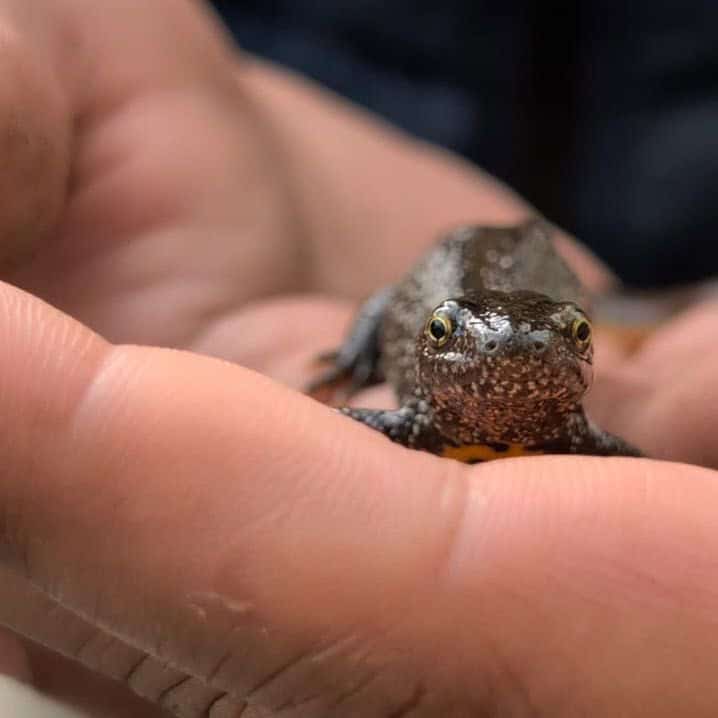
Nadya with a Great Crested Newt found during the survey
Beautiful yet elusive, newts are surprisingly well camouflaged and are active at night to breed and hunt slugs, snails, worms, and other insects. Great Crested Newts (GCN) breed in ponds in the spring, and metamorphose into their terrestrial form once they mature and hibernate on land. They are sensitive to water quality and habitat changes that have led to steep declines over the last century. Thus GCN are now a European protected species with international protections from trapping, trading, and disturbance.
In collaboration with the Ealing Park Rangers, Froglife, and Friends of Horsenden Hill EWG has conducted annual surveys under license to monitor the population and conserve GCN habitats. This surveying is now expanding to more sites across the borough in support of the London Amphibian and Reptile Group and Ealing Beaver Project. With this diligent monitoring and management, Ealing may have more places where the GCN and other wetland species flourish.
You can learn about EWG’s efforts to improve habitats for these precious creatures in Sean’s video from 2019.
Nadya Mirochnitchenko, EWG Ecologist
Please note that surveying was carried out under license by a professional Ecologist who kindly allowed us to film for educational purposes, as it is illegal to handle or disturb GCN unless you have a license.