
Boston Manor Park is a beautifully restored 14-hectare park in Brentford surrounding the Grade 1 listed Boston Manor House. Lady Mary Reade built the Jacobean Boston Manor House in 1623. The grounds were described as comprising of “gardens, walls, walks, courts, 5 fishponds…Plantation and nursery computed to be 3 acres…Whole being well wooded and watered.” In 1670 it became the Clitherow family home for 5 generations until 1918, when the House and the remaining 20 acres of the estate were purchased by Brentford Urban District Council and opened as a public park in 1924. The park has a wide diversity of habitats, many of which have been recently improved or restored by the £5m restoration project funded by the National Heritage Lottery Fund.
The formal planted areas (18C walled garden, beds and long borders leading from the House towards the Park Hub building) are beneficial for wildlife, with beds filled with plants for pollinators that flower at different times of year to extend the availability of nectar and pollen. You can see many different pollinators enjoying the flora, which includes attractive Echinacea, Japanese anemones, French and English Lavender, espalier fruit trees, along with some vegetables and sensory plants – all of which are used as educational resources and inspiration for our many nature-based, creative and well-being workshops. Our local volunteer moth recorder has been surveying the walled garden and adjacent service yard over the last couple of years. On her most successful survey, she recorded 69 species, and recently her first-ever sighting of a Sallow Kitten Moth!


The park has two sections of woodland, with the section between the lake and the M4 being ancient woodland (i.e. continuously wooded for 400+ years). Bluebells (an ancient woodland indicator species) are present in both sections of woodland and the local community and volunteers have planted a staggering 11,000 further native woodland bulbs and plants (Wood Anemone, Winter Aconite, Bluebells, Snowdrops, Red Campion and Wild Daffodils) over the last 2 years! There are a number of veteran trees in both the park and woodland (approx. 250-300+ years old), including Ash, Sweet Chestnut, Sessile and English Oak and the magnificent Cedar of Lebanon tree on the south lawn. This cedar is reputedly the largest in London, with a staggering 8m girth, and we know from James Clitheroe III’s diaries that it was planted from seed on 31 May 1754, making it 270 years old. Goldcrests can often be heard amongst the branches of the cedar and other conifers in the park. These veteran trees (with deadwood, rot holes and hollows) provide nesting and roosting sites for birds and bats, as well as important nutrition and shelter for a whole ecosystem of species including inverts, fungi, lichen and moss species. We maintain the woodland with traditional coppicing of the Hazel on rotation and use felled wood and stems for the garden, loggeries, deadwood piles and dead hedges. These deadwood habitats are ideal refuges for amphibians, small mammals and inverts. Stag Beetle larvae can be found in old wood and woodchip piles (left alone for them to develop) and the striking adults have been seen in the park too.
Our night walk events have recorded 4 bat species so far (Common and Soprano Pipistrelle, Noctule and Daubenton’s). Hedgehog families can be found in the park but unfortunately each year a few have been attacked or even killed by inquisitive dogs, and one was killed by a mower 2 years ago. We now run a volunteering event to check the meadow for hedgehogs before the big, late-summer cut and we have set up a partnership with Ealing Hedgehog Friends (who have been rescuing injured hogs and preparing them for release) to support us in protecting our local population. We are putting up posters and a seasonal noticeboard to raise awareness, creating engagement and education events and building hedgehog-only accessible enclosures and hibernacula in the woodland (next event Sat 19 Oct! See end of article for our events/contact details). This partnership adds to our many amazing wildlife supporters, recorders, volunteers and other groups (not forgetting EWG, Wild Chiswick and our recently created dog walker & owners’ community group) that all work alongside our education programme for schools and the community – helping to educate and encourage responsible and positive wildlife awareness and interactions.

The monthly bird walk (first Saturday of each month) surveys species and numbers in the park. Since starting the walks in late 2021, 59 species have been recorded. Along with typical urban park species, in the woodland and meadow areas, you can see Stockdove, Goldcrest, Mistle and Song Thrush, Nuthatch, and both Green and Great Spotted Woodpeckers. Kestrels are often seen around the meadow and other raptors on occasion, and in season Redwing, Fieldfare, Blackcap, and even a Redstart one recent spring. In the river section, some of the highlight species include Grey Wagtails around the weir at the end of the M4 flyover, Kingfisher flying down the river (the steep banks provide ideal nesting sites) and Grey Herons stalking fish in the shallows. Flocks of Goldfinch and Starlings prefer the areas around the walled garden and at the lake, you might spot Coal Tits as well as resident Coot, Moorhen, Mallard, Mute Swan, and often Canada Goose, Egyptian Goose, Black-headed Gull and Tufted Duck, as well as the delightful, white domestic duck ‘Jemima’ and her 2 drakes, with more infrequent visits by Mandarin Ducks, Greylag Geese, Gadwals and Little Grebes. See if you can find all 6 of our ‘secret’ mosaic birds hung discretely along parts of the woodland path that descends from the lake.
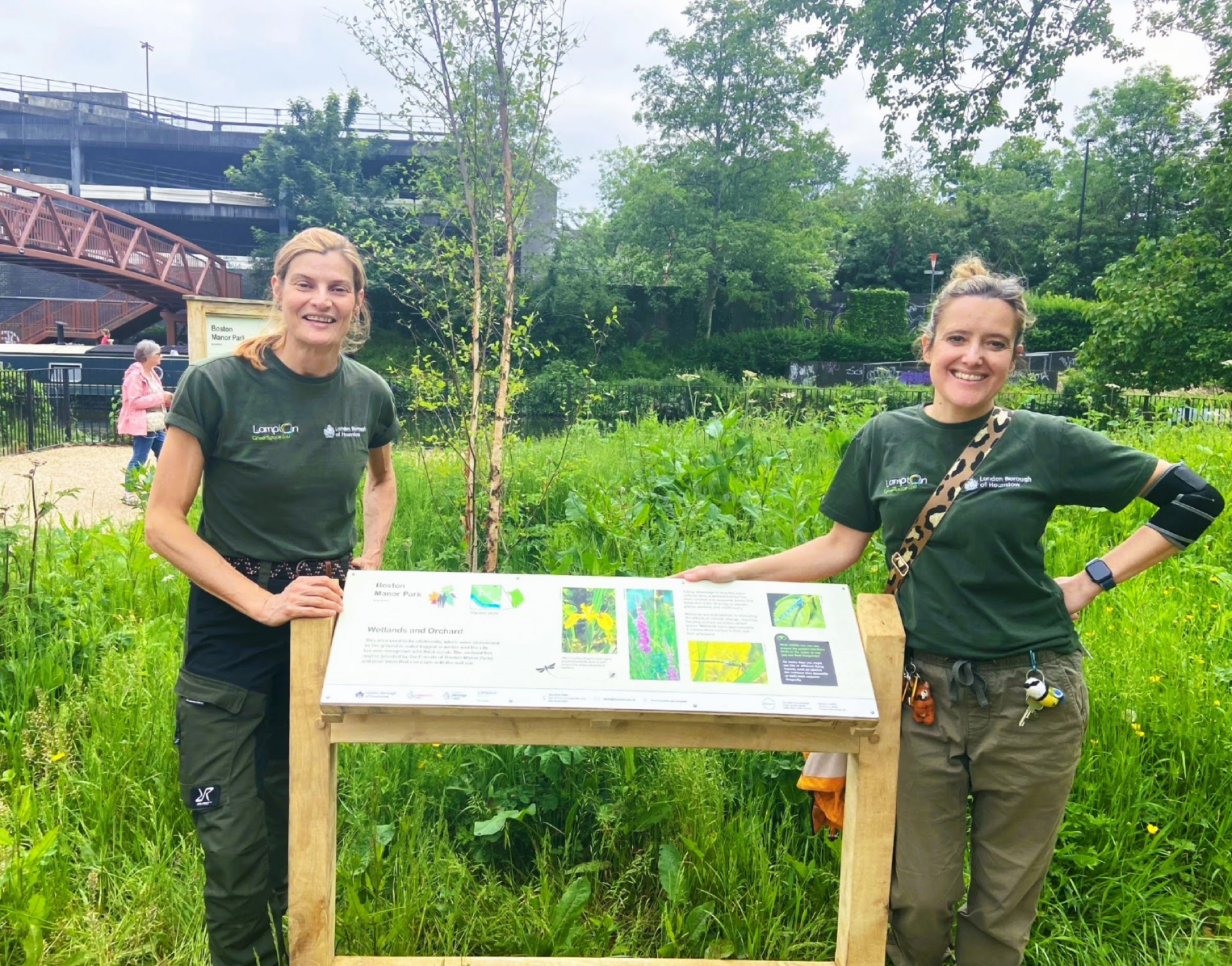
The wildflower meadows are in the south of the park, the main section overlooked by a magnificent solitary veteran Oak tree surrounded by a dead hedge, and the area to the south between the hard surface path and the canal features taller ruderal plants with two wetland scrapes. This area by the canal is much wetter than the main meadow, and we have planted aquatic marginal and wetland plants in and around the seasonal scrapes, including Purple and Yellow Loosestrife, Marsh Marigolds, Flowering and Soft Rush, Water Plantain, Common Reed Grass and Yellow Flag Iris.
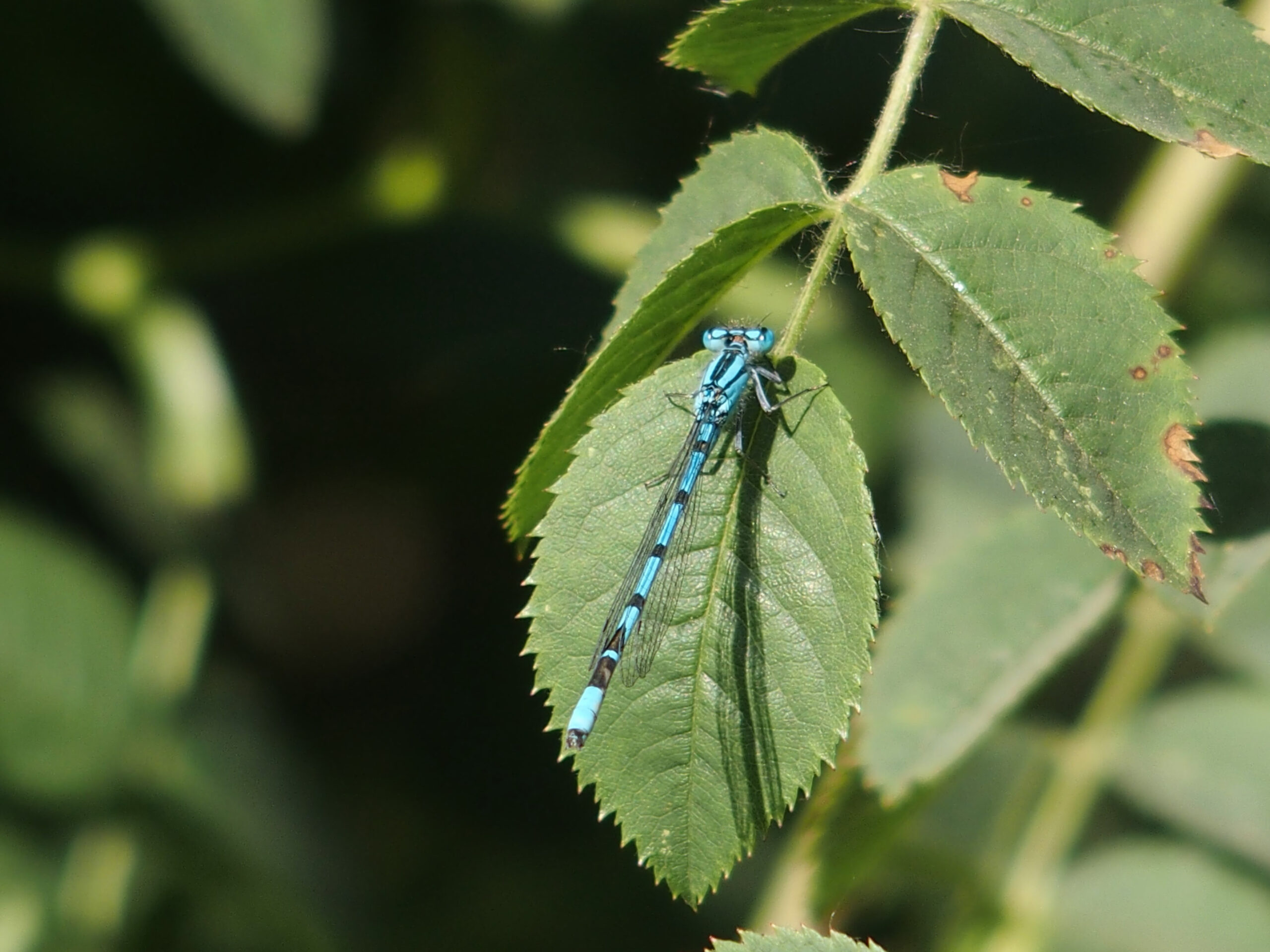
In the meadows and watered areas in the park, you can see dragonflies and damselflies (Emperor Dragonfly, Broad Bodied Chaser, Red-Eyed Damselfly and Common Blue Damselfly frequently spotted, as well as Black-tailed Skimmer).
Flowers in the meadow include spring and summer-flowering species from Meadow Buttercup, Ragged Robin, Primrose and Cowslip, to Vetch and Vetchlings, Birdsfoot Trefoil, Hedge And Lady’s Bedstraw, Common Knapweed, Selfheal, Oxeye Daisy, Ragwort, St John’s Wort and Teasel. In 2024 volunteers planted over 2,000 plug meadow and woodland plants to support and increase the meadow and woodland’s biodiversity. In the summer the meadow is filled with the sounds of crickets, grasshoppers, buzzing bees and hoverflies. Butterflies recorded in the meadows include Gatekeeper, Meadow Brown, Green-Veined, Large and Small White, Common and Holly Blue, Essex, Small and Large Skipper, Peacock, Painted Lady, Red Admiral, and Cinnabar and 6 Spot Burnet Moths. Orange Tip, Brimstone, Speckled Wood and Comma Butterflies are found in the woodland areas. On one memorable occasion under the M4 flyover, our local recorders saw a White Letter Hairstreak Butterfly.
Our amphibian wildlife has successfully recolonised the lake and surrounding areas since its restoration. We were surprised to find Common Toad hibernating in the service yard during the project construction phase and have ensured they have a safe place to return each year by building a large hibernaculum there. The first spring after the lake was refilled saw the return of Common Frogs, Smooth and Palmate Newts. We have ensured there are plenty of refuge areas including log piles and longer vegetation for them to shelter in.
We continue to do our utmost to protect wildlife and enhance our habitats for them to thrive. We hope you will visit Boston Manor Park to come to one of our walks, join in our fun and engaging events or volunteering activities, or just enjoy this beautiful park!
Email: bostonmanorpark@hounslow.gov.uk
Facebook: Boston Manor Park outdoor events and activities
Vanessa Hampton Park Manager
Natasha Gavin Education Officer