

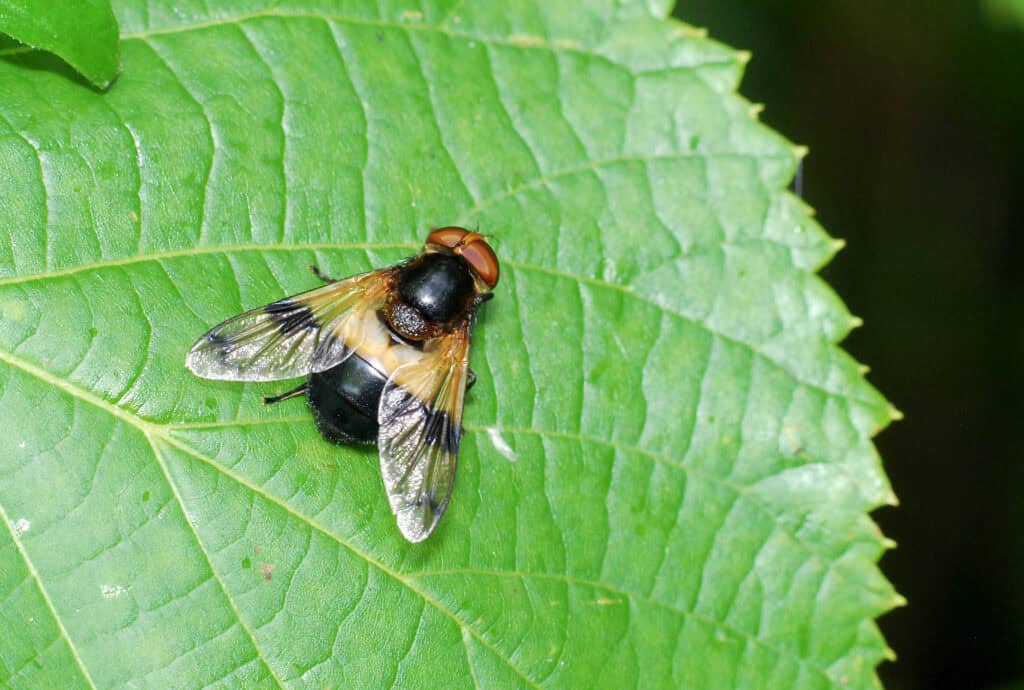
Situated in the north-west of the borough, the park was officially opened in 1996, and has an area of 110 hectares. It straddles the A40 and has the Grand Union Canal running though it in a north-to-south direction. North of the A40 to the east is Birch Wood which is secondary woodland as well as a small pond which is usually covered in duckweed. As well as birch there are other species present including Sycamore, Elder and Hawthorn with plenty of bramble scrub. Great-spotted Woodpecker can be found here and both Blackcap and Chiffchaff breed here as well as a variety of common breeding resident species such as Robin and Wren. Grey Wagtail is sometimes seen along the small stream that passes through the site towards the Greenford Lagoons. In the sunny glades a number of insects like Speckled Wood, Comma and the distinctive hoverfly, Volucella pellucens, can be observed.

Between Birch Wood and Belvue Park to the west are a number of large industrial buildings. Though the latter are not strictly part of the park they do host a number of breeding Herring Gulls and smaller numbers of Lesser Black-backed Gulls. Belvue Park and the associated Northolt Manor with St. Mary’s Church are in the north-west portion of the park and the manor dates back to Saxon times. Pieces of iron-age pottery and Roman roof tiles have been found here. There are a number of information signs here to give more information on the history. The gravestones in the cemetery are an interesting place to look at lichens and can harbour over-wintering ladybirds. A recently arrived species of shieldbug, Dyroderes umbraculatus, has been recorded here. It was first found in England in 2013 and the species feeds on bedstraws including Goosegrass. The meadows in Belvue Park look spectacular in June with a mass of Ox-eye Daisies along with other species such as Lady’s Bedstraw and later knapweeds. These support a good range of insects and Meadow Browns, Marbled Whites and skippers can be seen visiting the flowers as Emperor Dragonflies hunt insects here.

South of the A40 is an area of secondary woodland in the east while immediately to the west of it are the Greenford Lagoons which take run-off from the road. In the past when these had open water Mute Swans, Mallard, Moorhen and Coots bred here but the site is now dominated by Common Reed. Reed Warblers still breed here in the summer, though the small reedbeds at Northala is an easier location to see and hear them.
In the spring, the salt-tolerant Danish Scurvy Grass can be seen adjacent to the road; a plant that was formerly restricted to saltmarshes, but has spread around most major roads which are regularly gritted in the winter. Hedgerow Cranesbill is one of the more conspicuous flowers along the footpath. Foragers may enjoy the various Cherry Plums and blackberries that flourish here.
Marnham Fields is an area of recently planted woodland, a few mature trees, scrub and meadows. There is also a newly created pond which should support local amphibia and dragonflies amongst other fauna. The trees include Silver Birch, Rowan, a fine Aspen, Oak and Hazel. This is a good area for butterflies with Orange Tips, Brimstones, Peacocks, Small Tortoiseshells and Peacocks in the spring. As summer follows Gatekeepers, Marbled Whites and Meadow Browns can be enjoyed. The White Bryony here supports a scarce ladybird, the Bryony Ladybird. The Bryony Bee, Andrena florea, also uses this climbing plant.

A number of warblers breed here with Blackcap and Chiffchaff most common but also two or three pairs of Whitethroat. This year a Garden Warbler held territory and Lesser Whitethroat occur in passage. Scarcer species I have recorded here in the past include Cuckoo, Redstart and Firecrest. With a bit of luck, Muntjac can be seen here, as well as Foxes. Around a mini-Stonehenge is a large colony of Warty Cabbage which is a yellow-flowered mustard species. It spreads primarily by vegetative means.
The canal supports common waterbird species and Cormorants can be seen fishing or perched up in the trees. Fish that live in here include Roach, Rudd, Tench, Perch and Pike. Growing along the canal edge is the attractive blue-flowered Skullcap as well as Gipsywort and Dittander, the latter also growing at the base of the nearest Northala hill.
Crossing the footbridge from Marnham Fields takes you onto Smith’s Farm, with areas of scrub, some large sallows, meadows dominated by Tufted Hair Grass and a seasonally flooded area. Most regular on the latter are Mallard, Coot and Moorhen but in years with more water, small numbers of Gadwall, Shoveler and Teal can gather, as well as Little Grebe. Snipe used to be regular, but numbers have much reduced in recent winters. Cetti’s Warbler is a recent arrival here.

Following the path towards Kensington Road are a number of interesting plants including a small number of Bee Orchids, Stone Parsley, Purple Toadflax and Cyclamen hederifolium. Crossing the road takes us to the most popular part of the park with the general public, namely Northala Fields which officially opened in 2008 and is just under 30 hectares. Facilities here include café, toilets and fishing club. There are six fishing ponds surrounded by Alders, and three wildlife ponds. In addition to reeds, the latter host a variety of wetland species including Yellow Iris, Marsh Marigold and Ragged Robin. Reed Bunting and Reed Warbler can be found here, with luck. Goldfinches feed in the Alders in the winter, and there is a huge roost of Ring-necked Parakeets here and in the surrounding area, with well over a thousand birds.
This area is also a very important area for feeding bats and Ealing Wildlife Group occasionally hold dedicated bat walks here where Common and Soprano Pipistrelles, Daubenton’s and Noctule Bats can be found. Common Toads and Common Frogs breed in the fishing ponds; the latter are also in the ditches, as are Smooth Newts. At breeding time Grey Herons can be seen catching the amphibians. The ponds are very important for dragonflies with Emperors, Black-tailed Skimmers, Migrant Hawkers and Common Darters amongst the commonest species. For the first time, an expanding colonist the Lesser Emperor was recorded here. The floating vegetation supports Red-eyed and larger numbers of Small Red-eyed Damselflies, while later in the summer Willow Emeralds are quite common. Blue Alder Beetles can be conspicuous on the Alders and can cause some defoliation of them. The ditches in the spring are a good place to look for Large Red and Azure Damselflies.

The four large hills which protect the site from traffic noise are constructed from the spoil of the old Wembley Stadium and the construction of the White City Westfield Centre. They were sown with wildflower mixes including plants such as Field Scabious, Greater and Common Knapweed, Bird’s-foot Trefoil and Salad Burnet. Most of these are still hanging on but in places courser plant such as thistles, docks, Hoary Mustard and Goat’s-rue dominate. Wheatears occasionally turn up on the hills during passage and Meadow Pipits were regularly wintering here though sadly there were few last winter and so far this autumn. Raptors are regularly sighted throughout the park with Red Kites the most obvious, along with Kestrels and Sparrowhawks. Buzzard, Peregrine and Hobby are less often recorded.
Passing through Medlar Park we come to Rectory Park in the south-west corner of the country park. This is dominated by sports turf (and artificial turf) as well as skateboarding and play areas, which has limited wildlife value, though large numbers of gulls use the site in autumn and spring when there may be over 200 Blackheaded with smaller numbers of Common and Herring Gulls and a few Lesser Black-backs. Small flocks of Pied Wagtails can also be seen here.
The small pond with Reedmace supports quite a few dragonflies, though avian interest is limited. The meadow/scrub area nearby sometimes holds flocks of Goldfinch with a few Linnets, though sadly as with other local sites these seem to be disappearing. The planted area around the building is well worth checking for pollinators with a range of common bee and hoverfly species recorded including the distinctive Wool Carder Bee.
Neil Anderson