With the frost and snow in November, it feels like winter has well and truly arrived. As we layer on the jumpers and crank up the heating, our local wildlife is using a variety of strategies to cope with the cold weather. We can look at some of EWG’s projects to see how the wildlife we are helping is going to manage this winter.
Hedgehogs
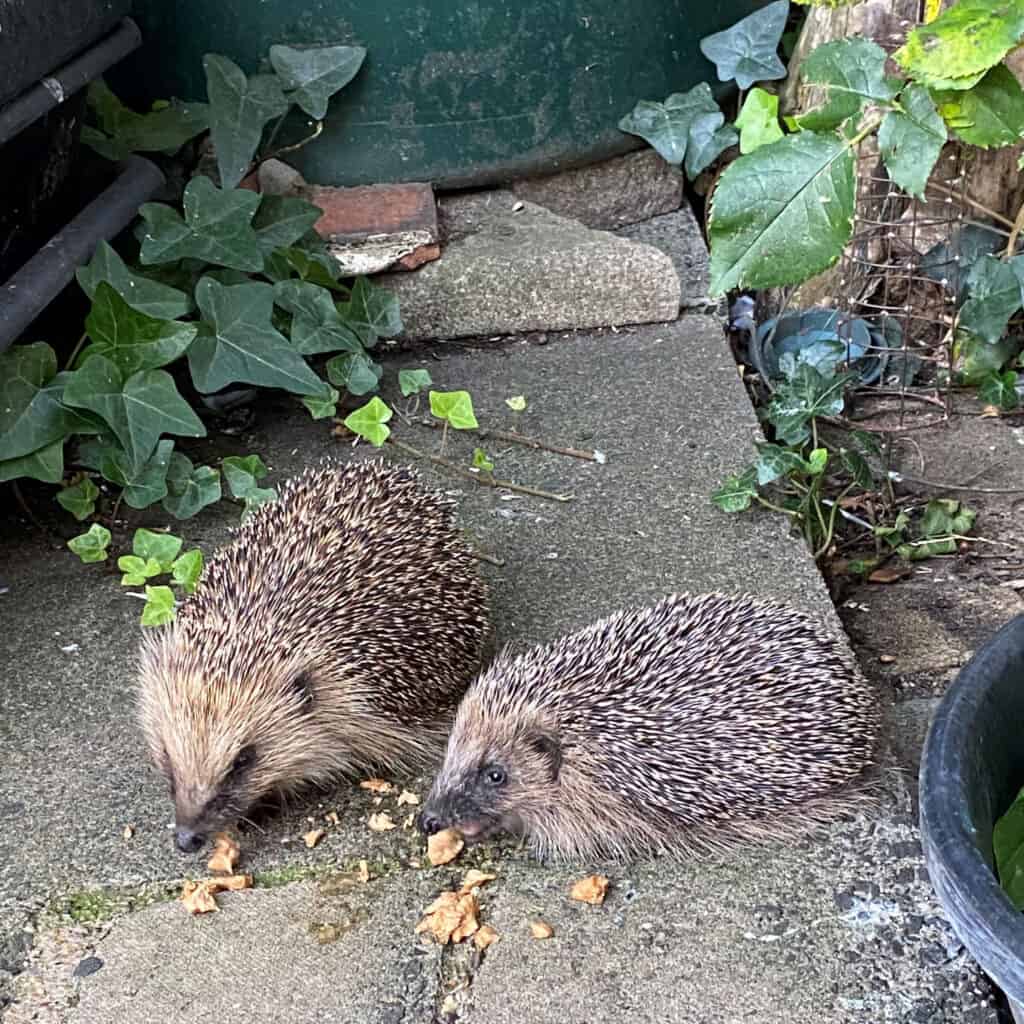
I’m sure most people know that European Hedgehogs (Erinaceus europaeus) hibernate during the winter, but you might be surprised to know they are only one of three mammal groups in the UK that experience true hibernation – the others being our bats and dormice.
True hibernation involves a greatly reduced metabolism, with a very slow heart and breathing rate and a body temperature that is significantly lower than usual. The change can be so dramatic that it can be difficult to distinguish a hibernating animal from a dead one. Typically, it can take an hour or more for a hibernating animal to wake from this state and so this happens very infrequently during the hibernation period (usually for a bowel movement or to move location, perhaps with a snack thrown in for good measure).
I’ve always felt like hibernation might be a good way to sit out some of the greyer months of the year, but because the animal becomes so inactive, it’s extremely vulnerable to disturbance by predators, people and flooding.
EWG has been doing its part to help Hedgehogs by building hibernacula in some of the parks where they are present (essentially mini huts made from logs and leaf mould) to help provide a safe place for our hogs to sleep out the winter months.
Beavers

Beavers (Castor fiber), like many of our mammals, remain active during the winter and tough it out! They will have spent the summer months building up a healthy layer of fat, to provide them with both a layer of insulation and a food reserve for the coming months.
During autumn they will have been stockpiling food in the form of branches and twigs harvested from nearby trees. They will drag these underwater where the cold will keep them fresh and where they will be close on hand whenever the beavers get hungry. Food is often stored near the lodge (where the Beavers will sleep) so they can access it with a brief trip and avoid having to come out on land.
Very sensibly, Beavers will spend most of the winter sleeping and resting, so they can conserve as much of their body fat as possible. Typically, they will leave the lodge just once a day to eat and as our Beaver family has grown, there are plenty of other furry bodies in the lodge to keep it warm.
As always, we monitor the welfare of our Beaver family during the winter, but as this species lives well up into Scandinavia, and with most of our family already used to Scottish winters, they shouldn’t have anything to worry about from an Ealing winter.
Swifts

Did I say I wanted to hibernate? Forget that! Swifts (Apus apus) have a much better idea and have long since departed for sunnier climes.Feeding almost exclusively on flying insects, as the temperatures drop and those insects start to disappear, and without the option to hibernate like bats, Swifts follow the food south again.
All the Swifts you will have seen around Ealing this year will now be in sub-Saharan Africa, having flown for around 3,400 miles to get there, perhaps with a (very relatable) refuelling stop in France or Portugal.Swifts are superbly adapted for flying and can stay on the wing for as long as two years without landing. In fact, they are so strongly adapted to an aerial life that if they end up on the ground, they can be in serious trouble.
In spite of these adaptations, Swifts face some significant challenges on this migration, especially from adverse weather, but also from the ongoing impacts of climate and land use change which is having a knock-on effect on the insects they feed on.
There is not much we can do directly to help the Swifts with these risks, so we are making changes at a local level, by working to install Swift nest boxes around the borough, along with calling systems designed to attract new birds to the nesting site. There has been a significant decline in suitable nesting sites for these birds, and by setting these up, we hope we will be able to get more chicks raised in the neighbourhood, and so boost the population that way.
Great Crested Newt
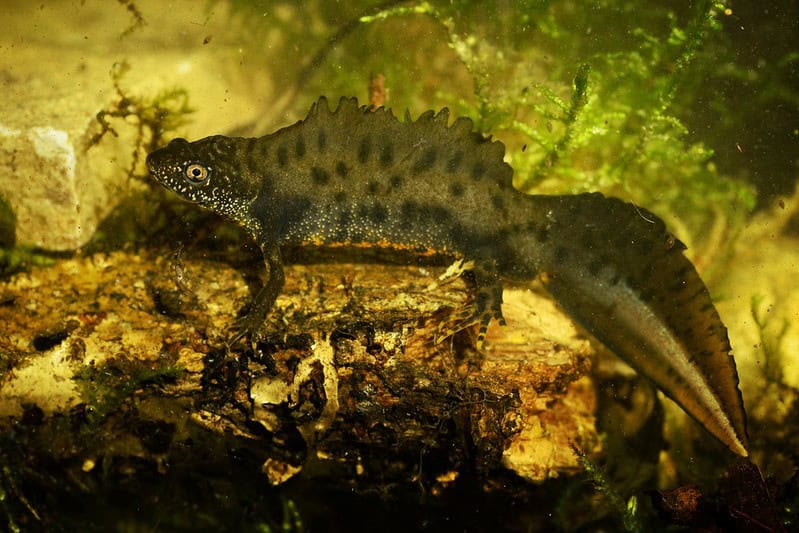
Many people think that our reptiles and amphibians hibernate, but they actually go into a different state called brumation. There are lots of technical differences between hibernation and brumation, but you can think of brumation as a sort of ‘hibernation lite’.
Our Great Crested Newts (Triturus cristatus) will become inactive but won’t fall asleep and they are more likely than our Hedgehogs to have periods of activity when the weather is suitable. This can make them less vulnerable to disturbance then hibernating mammals, but potentially leaves them at more risk from climate change, as they may spend more time active and burn through their reserves before spring.
A good hibernation spot for a Great Crested Newt (and most of our other reptile and amphibians) would be under a log or rock pile, where they are sheltered from the worst of the weather and are unlikely to be found by predators. Some of our other amphibian species prefer to hibernate in the mud at the bottom of ponds (a good reason to include a pond and a log pile in your garden if you needed one).
Most of our work in EWG around Great Crested Newts and other reptile and amphibians is in mapping where they currently are in the borough –we’ve been working with a local ecologist with the necessary license in order to achieve this. We have also helped with pond maintenance at known breeding sites for this species to ensure that these ponds remain open and suitable for raising the next generation. And of course we have created hibernacula at some of our sites, such as Boles Meadow and Costons Lane.
Brown Hairstreak
Insects are often referred to as hibernating during the winter, but they also go through a different process, called diapause. This is even more extreme than hibernation in many ways – effectively the insect enters a state of suspended animation, where they stop aging completely (a nice trick if you can do it!). They will release chemicals into their body that significantly increase their tolerance to cold and can even act as a form of anti-freeze.
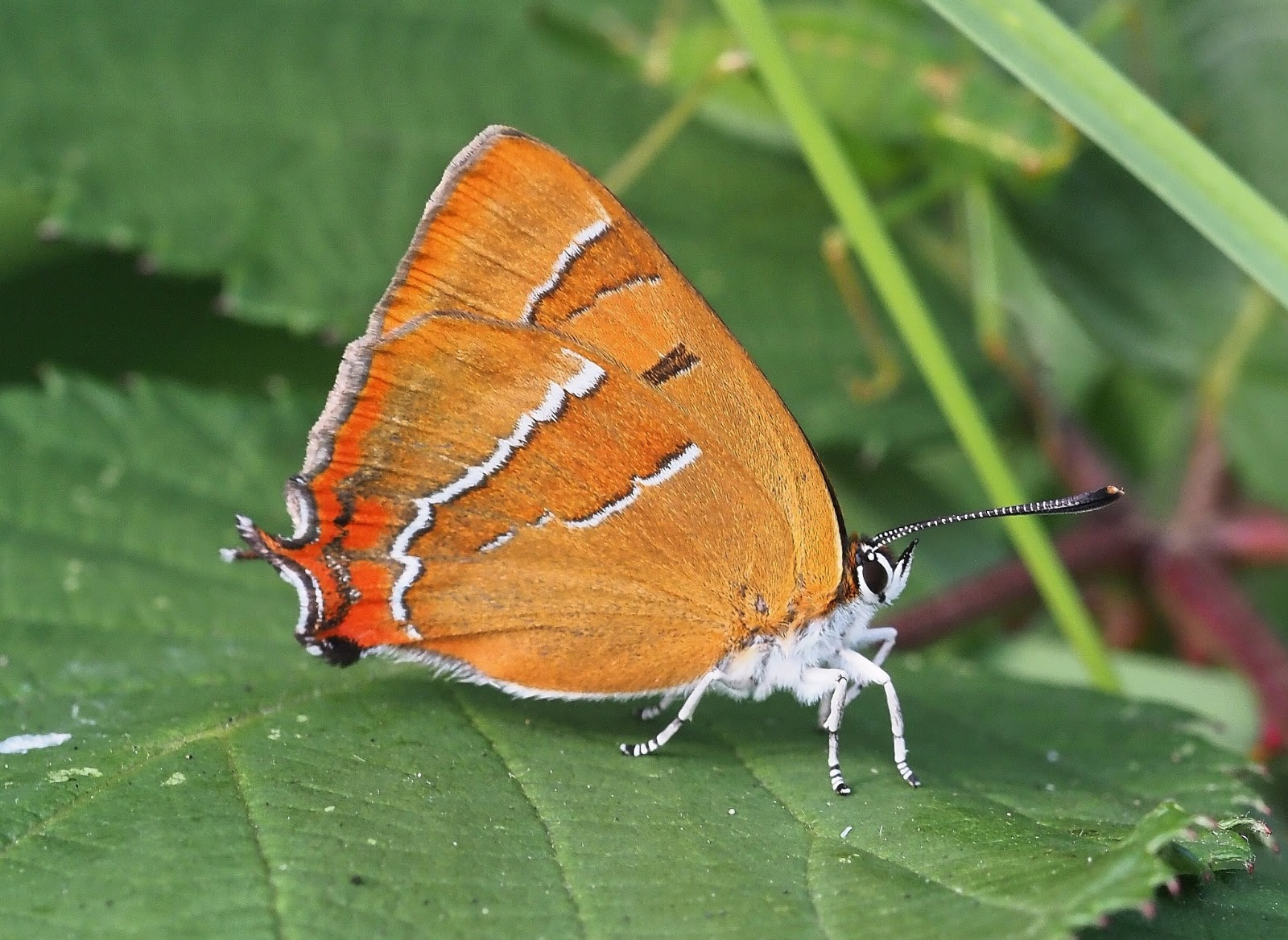
Although some of our other butterflies hibernate as adults, Brown Hairstreaks (Thecla betulae) are a late flying species, with eggs laid in mid to late summer. These eggs go straight into diapause and will remain suspended for around eight months (perhaps two thirds of the insect’s lifespan) until the warmer weather of spring, when the caterpillars emerge.
This enables the butterfly to remain protected from the cold weather, but that dormant period is not without its risks. The eggs, although well camouflaged, are still vulnerable to predation, but perhaps the greatest risk in modern times, is the flailing of hedgerows. This either kills the eggs directly, or separates them from the main plant, meaning that the caterpillar will likely starve when it eventually emerges.
This species is currently doing well in Ealing and is most certainly benefiting from the Rangers management of Blackthorn, which is not being flailed on an annual basis. At EWG we are keeping an eye on sightings of this butterfly and have undertaken a number of surveys for eggs and larvae to identify breeding sites. We are now working with Butterfly Conservation to ensure these records feed into the national dataset, so we can build up a UK wide picture of how the butterfly is doing.
Alex WorseyBiodiversity Data Officer / Costons Reserve Manager