
No, I’m not talking about the 60s pop sensation – I’m talking about shiny, six-legged Coleopterans (from the Greek kolea – sheath and pteron – wing). Beetles are amazing and undoubtedly underrated members of the insect world, and if you don’t already think so, I hope this article will change your mind.
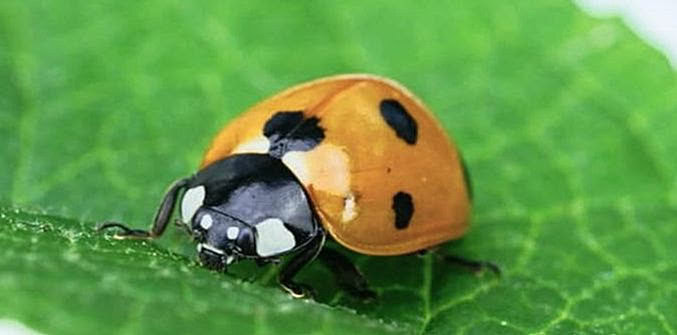
Beetles are everywhere! They make up the largest order of insects between 300 to 400,000 species described to date, or 40% of all insect species, and many more presumed. Indeed, they are so numerous the notable biologist J.B.S Haldane is said to have quipped that if a god or divine being had created all living organisms on Earth, then that creator must have an “inordinate fondness for beetles.” Given that the total weight of insects is estimated to be 70 times that of the human population, beetles are not to be taken lightly.
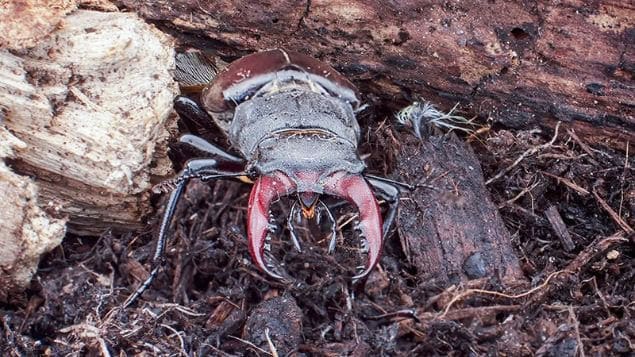
Beetles can live anywhere – they withstand searing heat and freezing cold. The Fogstand beetle (Stenocara gracilipes) lives in the Namib desert which is one of the most arid regions of the world. The beetle collects water vapour from the air with their textured body armour. This amazing beetle is inspiring scientific work in sustainable water harvesting and even aeronautical engineering.
At the other end of the temperature scale, beetles can survive temperatures far below freezing. They do this by producing anti-freeze molecules to great effect; the Alaskan Darkling beetle (Upis ceramboides) can survive temperatures down to -60°C. Again, scientific research is learning from these amazing insects to engineer a new generation of agents for industrial applications.
Beetles have been around for millennia – it’s likely that they originated in the Carboniferous era around 300 million years ago. There is no fossil record of beetles from that time, but rare fossils exist from the Permian era (300 – 250 million years ago), and beetles have been found in amber that dates back to the time of the dinosaurs around 100 millions years ago.
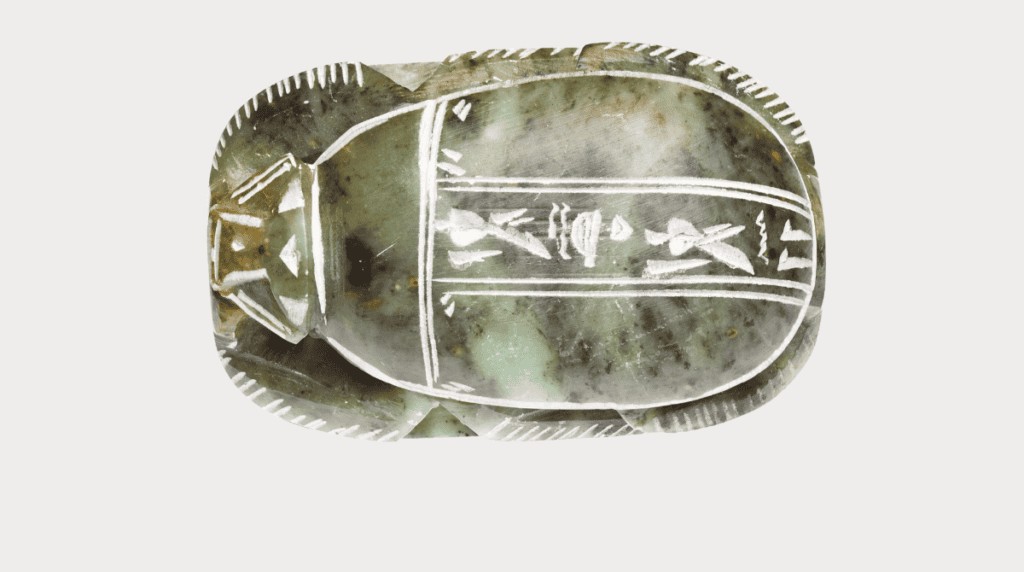
Beetles inspire human vanity – the colour and shine of some beetle species have an irresistible appeal to humans. Ancient Egyptians saw the Scarab beetle as a symbol of the sun god Re and made amulets and seals in the form of the beetle, and it is still possible to buy Scarab-decorated necklaces and brooches today. Pigment from the cactus-eating beetle Dactylopius coccus was once traded widely as cochineal, a dye used in food (yes, it was in red Smarties), cosmetics, pharmaceuticals and textiles. It has now been largely replaced by synthetic dyes. The wonderful metallic sheen of some beetles is not due to pigmentation but is due to the physical structure of polymers in the hardened outer set of wings. Unlike pigments, this “structural colouration” does not fade, and has potential applications across a range of industries, including car paint and cosmetics.

Beetles are part of a continuous cycle of life and death – many have important functions as detritivores (animals feeding on dead organic matter). Perhaps the most notorious of these is the dung beetle, of which there are 60 species in the UK. They are so important in clearing up sh*t, that when sheep and cows were first introduced to Australia, without accompanying dung beetles, their manure quickly became a real problem. This was remedied by the investment of millions of dollars over 20 years to introduce the beetles to the country.
Whilst detritivores have an essential role in recycling organic compounds, these traits can conflict with human interests. Wood-boring beetles lay their eggs in hardwood with high moisture content. In houses, their larvae are known as Woodworms and can cause significant damage to timbers as they slowly burrow under the surface. It may be important to remember that beetles have existed on the planet far longer than humans, and our attitudes toward them and the names we give them reflect our lens on their world – for example, does anyone ever stop to consider what Carpet beetle larvae fed on before there were carpets?
Beetles are important pollinators – they’ve acted this way for millions of years. Around 1,000 UK beetle species are pollinators. Some beetles have pollen as their main diet, and for some, such as Ladybirds, it’s a supplement to their carnivorous diets. They particularly like flowers with a strong scent, as they navigate by smell. They have a preference for flat, open flowers like Oxeye Daisies, and flowers in clusters, such as Cow Parsley.
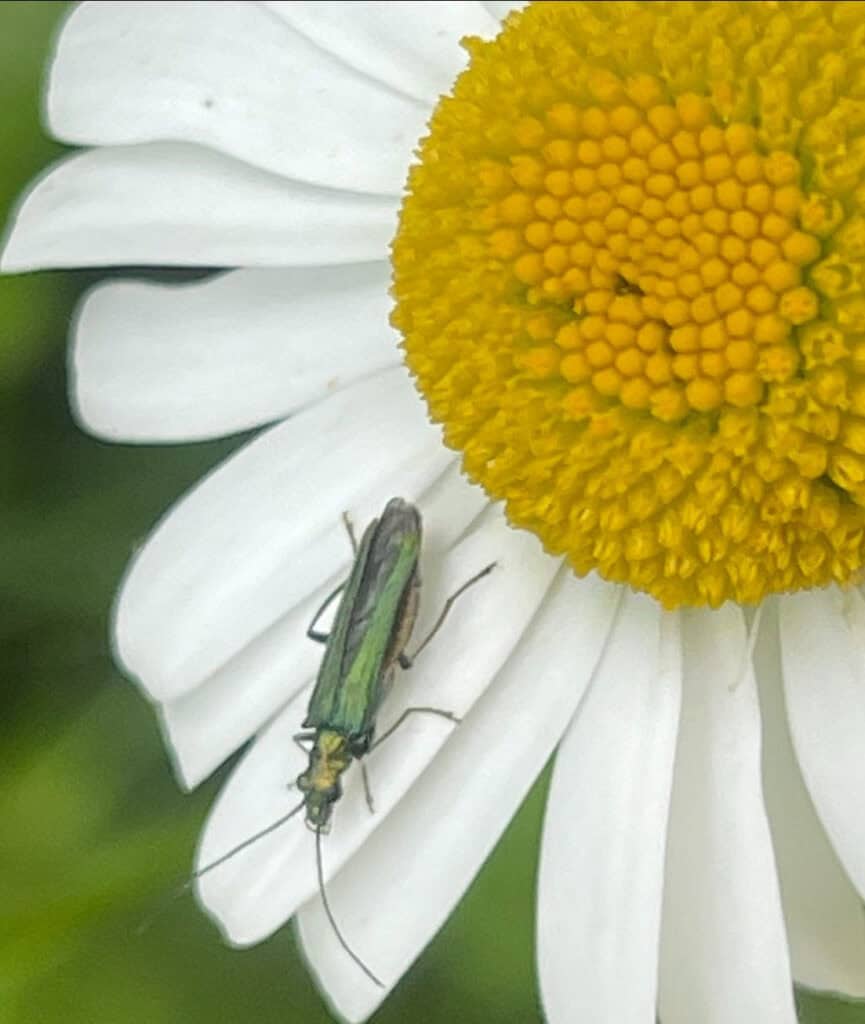
(Photo credit: Emily Gardner)
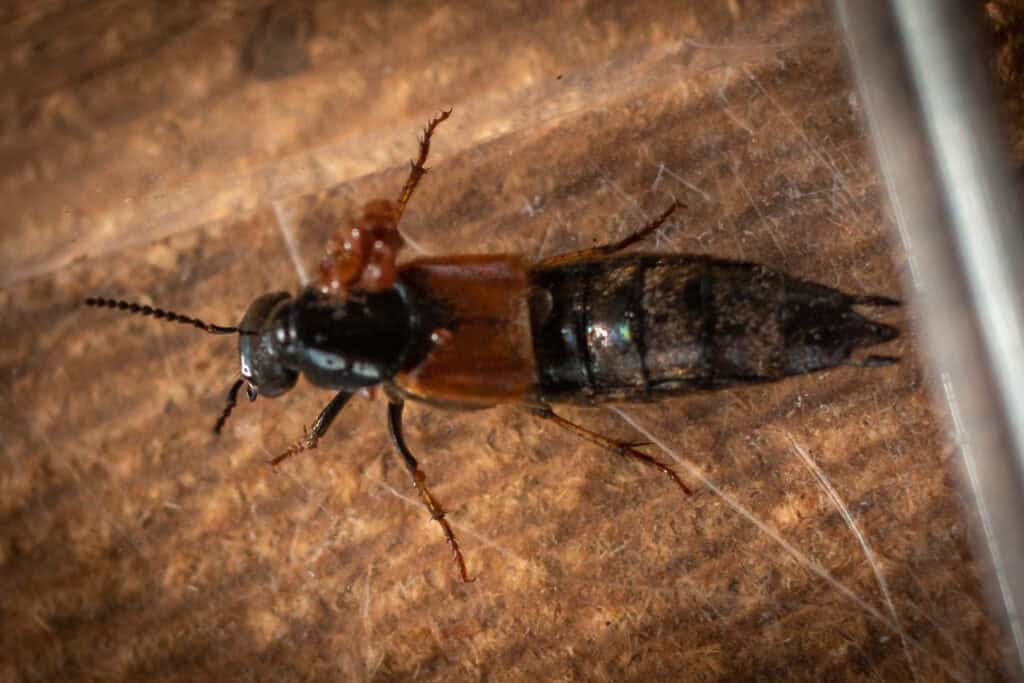

Beetles are voracious eaters and some are known as gardeners’ friends – Ladybirds and their larvae hoover up vast numbers of Green and Blackfly. The diverse group of ground beetles from the Carabidae family feed on slugs, cranefly larvae and cutworms. The Rove beetle (Atheta coriari) is sometimes used for biological control of greenhouse pests. Diving beetles are another potential form of biological control of mosquitos, as they have been shown to consume large numbers of mosquito larvae.
And, of course, in the usual natural symmetry of hunter and hunted, if you’re attracting wildlife into your garden, beetles act as an important food source for birds, hedgehogs and even foxes.
Beetles are truly wonderful creatures which we should nurture and treasure. For tips on how to encourage more beetles and wildlife to your outdoor space, a good starting point is The Wildlife Trusts or this blog by Sean.
Happy beetling!
Emily Gardner
EWG Newsletter Editor