Your New Year’s resolutions for 2024 may include exploring more of the wildlife-rich green spaces that Ealing has to offer. To help with this, each month we are going to explore some of the top nature sites in and around Ealing, occasionally just outside the borough. For January, Neil Anderson starts us off with a look around Yeading Brook Meadows.

This month we will have a look at Yeading Brook Meadows, a Site of Metropolitan Importance for Nature Conservation, which straddles the borders of both Ealing and Hillingdon and parts are managed by the London Wildlife Trust.
The whole site is 172 hectares in size with the Yeading Brook running through the middle of the site. This feeds into the River Crane and the whole area is part of the Crane Valley project. The brook also runs through other LWT nature reserves in Hillingdon, including Ten Acre Wood, Gutteridge Wood and Ickenham Marshes.
Several bus routes pass different roads around the site for access to this green oasis in the Green Belt. From the London Wildlife Trust website: There are several entrances along The Greenway, and one in Shakespeare Avenue. Buses 90, 696 and 697 stop in Kingshill Avenue near the northern boundary, and buses 140, 697 and E8 stop along Yeading Lane at the southern end. Buses, 427 from Uxbridge bus station to Worley road and 278 from Ruislip station to west, Ruislip, Ickenham and Hillingdon station are other routes to the reserve.
278 – Ruislip station to west, Ruislip, Ickenham and Hillingdon station
The nearest railway station, Hayes and Harlington, is a 30-minute walk away. The Hillingdon Trail runs through the site.
This large site has varied terrain unsuitable for wheelchairs. There is parking along The Greenway, on the site’s eastern edge. It is usually possible to park near the main access points. There is a surfaced footpath between the eastern and western sections of Shakespeare Avenue; other footpaths are unsurfaced.
Dogs on a lead
Yeading Brook meadows seasonally flood in places which has prevented the site from being built on. In addition to the botanically rich meadows, there are extensive stands of scrub, principally Blackthorn and Hawthorn.
The brook itself supports resident populations of Mallard and Moorhens with regular visits from Grey Herons and Little Egrets; the latter is sometimes seen feeding in small groups in flooded grassland. Small numbers of Teal can be seen in winter and both Grey Wagtail and Kingfisher are not infrequent.
The scrub supports breeding Blackcap, Whitethroat and Chiffchaff while in winter both Redwing and Fieldfare can be found feeding on berries. Sadly Skylarks no longer breed here, perhaps due to disturbance from dogs. In winter the sports turf can hold many gulls with four species often present with over a hundred Common Gulls at peak times. Occasionally several Common Snipe are present in discrete areas.
On a dry day, encounters with Red Kites are to be expected with often several visible by scanning around. Kestrels seem to be in decline here but still sometimes seen as are Buzzard and Sparrowhawk. Passage birds like Whinchat, Stonechat and Spotted Flycatcher may be spotted with luck.
At the end of winter, various seasonally flooded areas can see large numbers of Common Frogs breeding, though some recent seasons have seen the water disappearing before the tadpoles have metamorphosed. Grass Snakes are present but rarely encountered and not common.
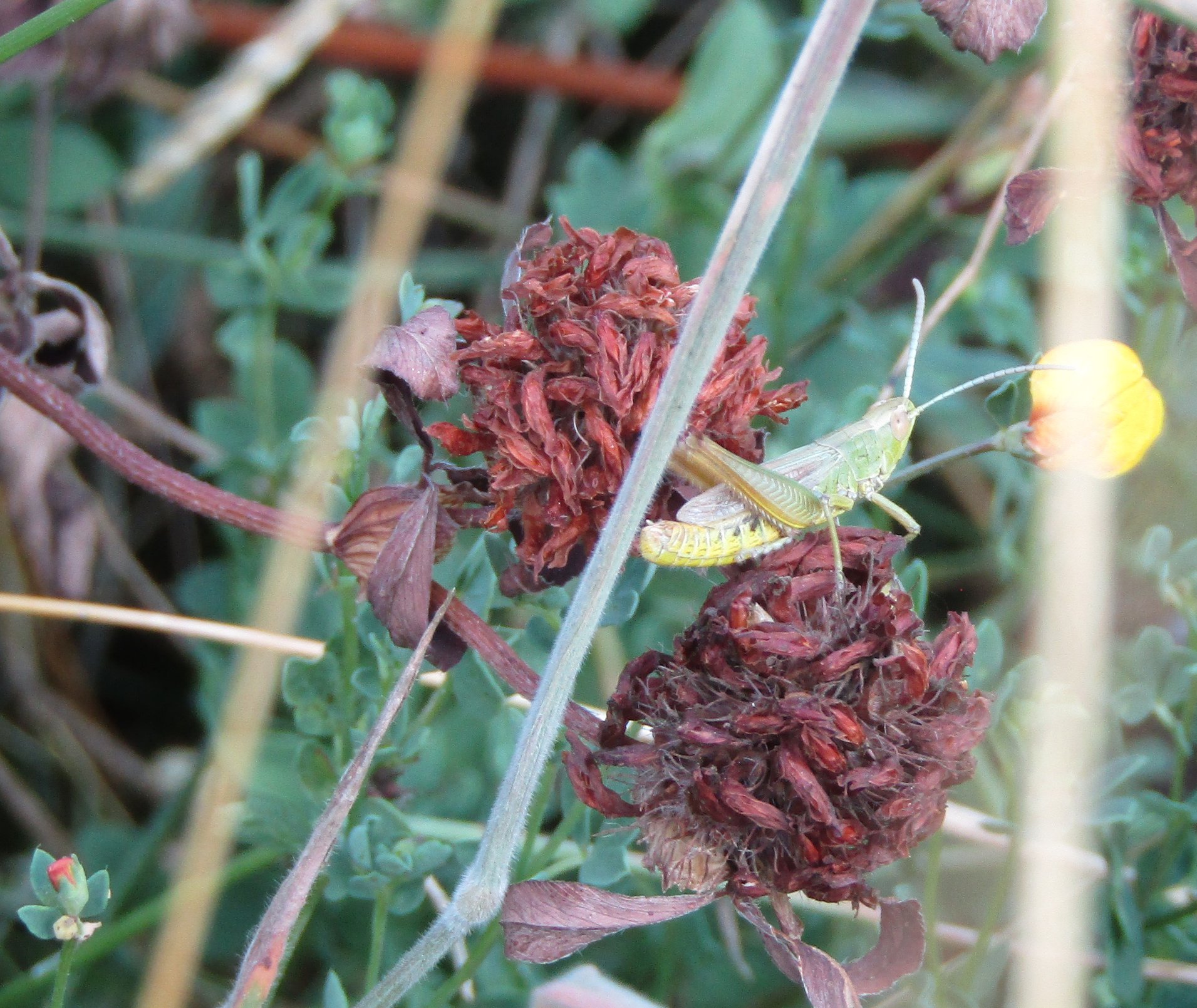
In summer, the meadows seem alive with insects. The buzzing stridulations of Meadow and Lesser Marsh Grasshoppers, Roesel’s Bush-crickets and Long-winged Coneheads are one of the joys of mid to late summer. Grassland butterflies such as Small Skippers, Meadow Browns, Gatekeepers and Marbled Whites can be seen in large numbers in the summer with smaller numbers of species such as Common Blue, Brown Argus and Small Copper. Brown Hairstreak has recently turned up here along with other nearby sites, while a few Purple Hairstreaks can be seen around Oaks. In the hottest period of 2022, I recorded an individual of both Dark Green and Silver-washed Fritillary here but none in 2023, so no doubt dispersing individuals. Large numbers of 6-spot Burnet Moths can occur with over 200 counted in one area last year.
Banded Demoiselles can be seen in small numbers along the brook and in mid-summer Emperor Dragonflies can be observed hunting across the flowery meadows. Other species such as Common Darters, and various hawkers can be seen from mid-summer onwards. Wasp Spiders can be found during late summer in their distinctive orb webs low in tussocky vegetation where they catch various Orthoptera.
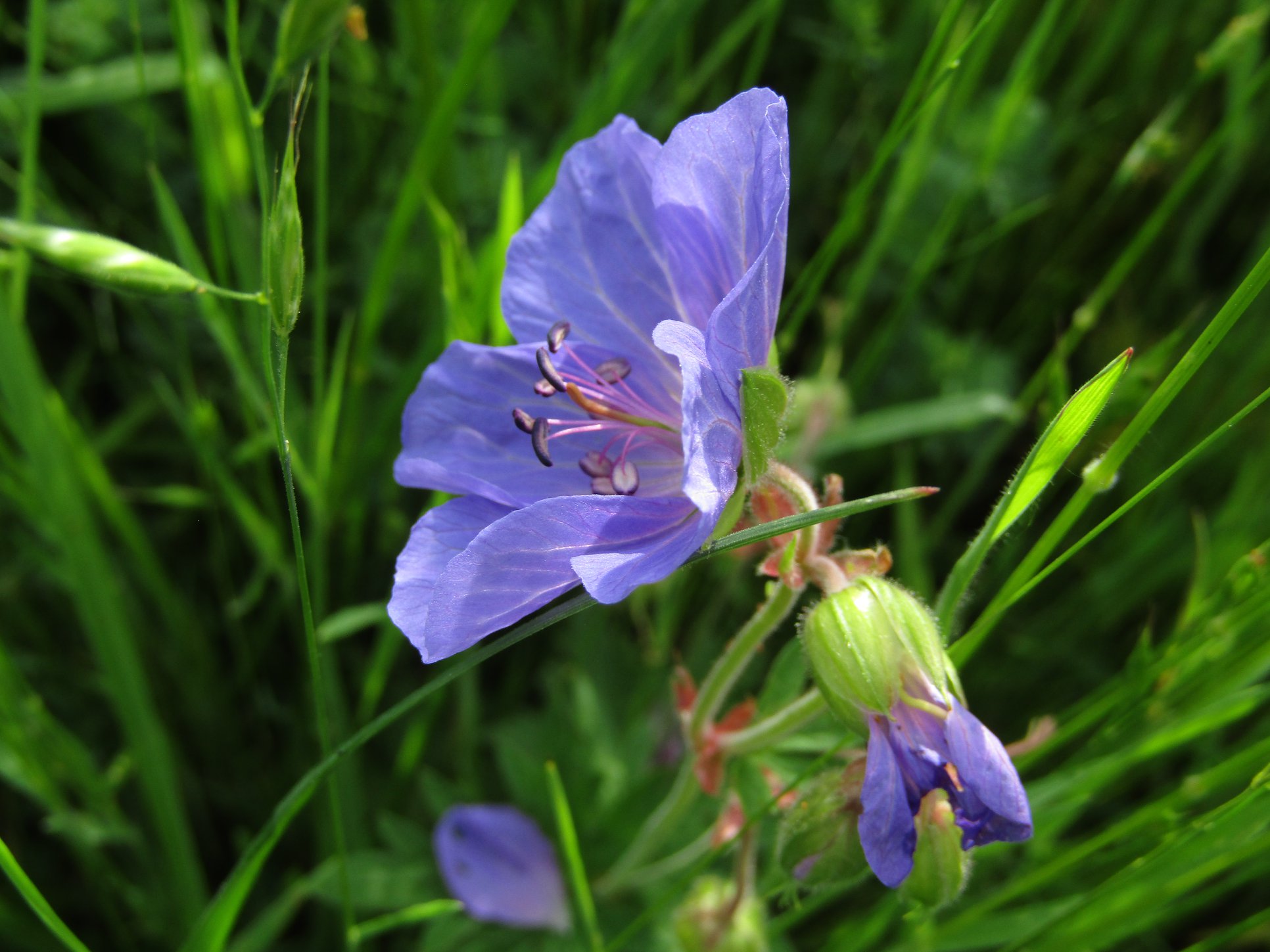
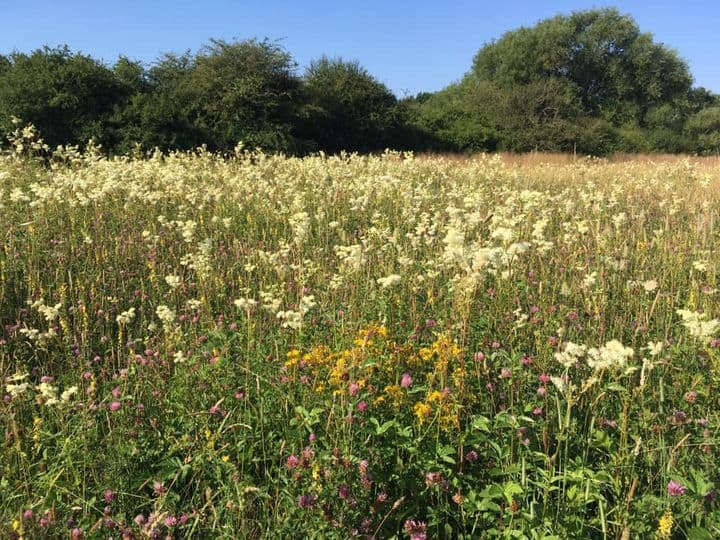
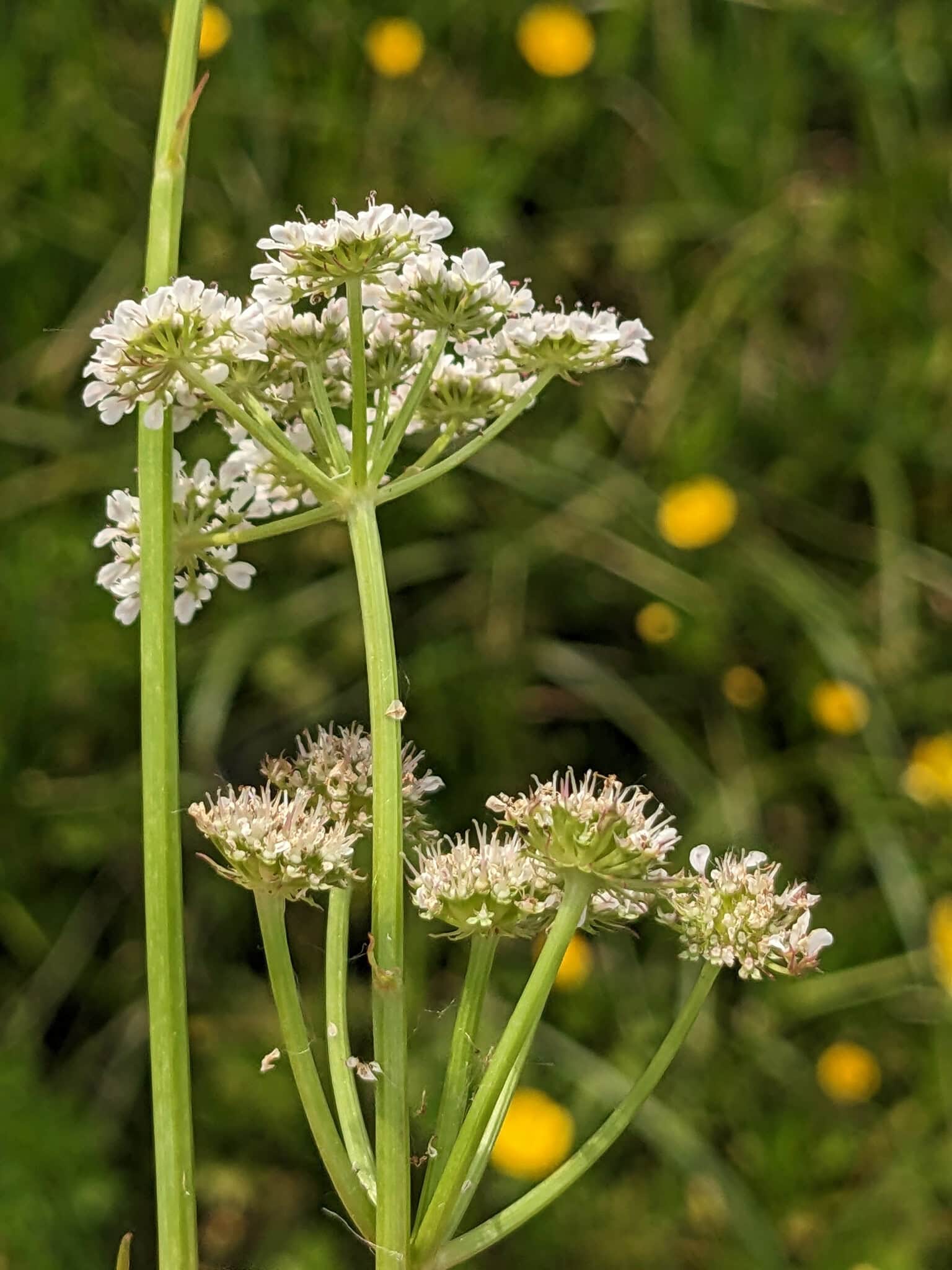
Yeading Brook meadows is particularly important for flora. Rarest is the white umbellifer Narrow-leaved Water-dropwort at its only extant site in Greater London and Middlesex. Sadly it is usually restricted to a few plants in an area called the “hollows.” A good colony of another umbellifer called Pepper Saxifrage is also present in another area along with other notable plants such as Great Burnet, Sneezewort, Marsh Woundwort and Ragged Robin. Meadowsweet is dominant in one area and the drier meadows have an abundance of Common Knapweed as well as plants such as Lady’s Bedstraw, Meadow Vetchling, Grass Vetchling and Red Bartsia. There is also a sizeable colony of Common Spotted Orchids.
Less desirable are some invasives along the brook, most notably Himalayan Balsam and Giant Hogweed; these are controlled periodically.
Here are some images captured at Yeading Brook Meadows by Jane Ruhland